-

YG-1 CUTTING TOOLS NEWSLETTER
-
2025 January VOL.56
Information provided by Product manager of round tools in EMEA
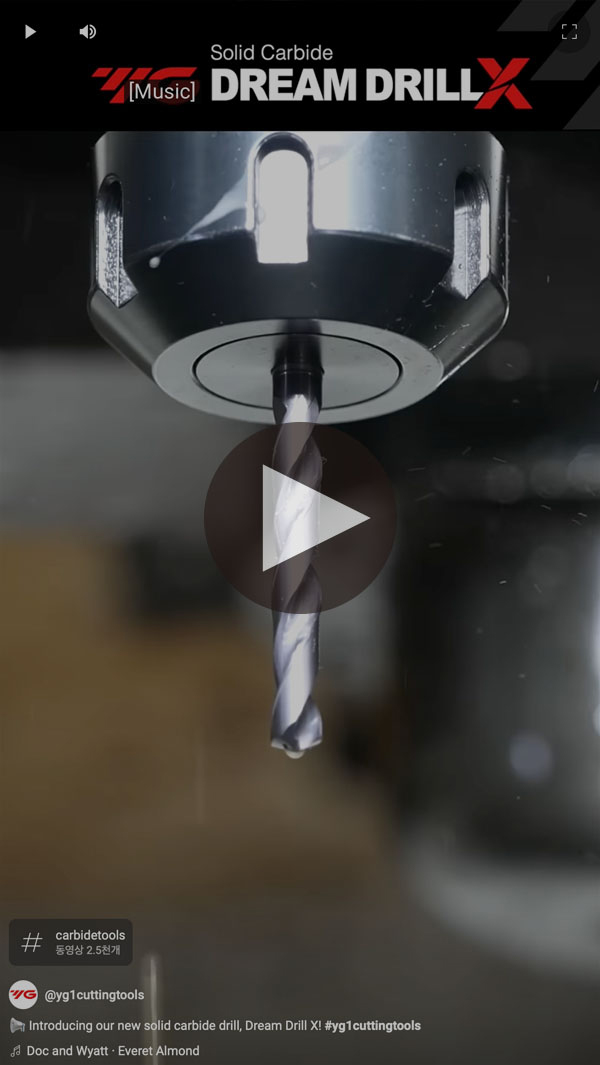
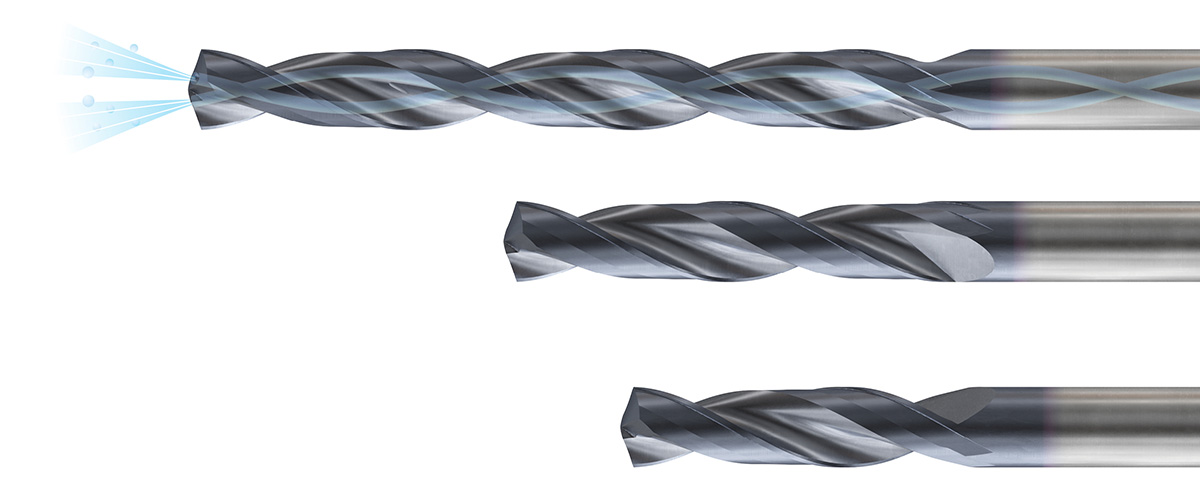
The Dream Drill General is a very well-proven concept. Within the Dream Drill family, it is our largest portfolio, with almost 1,300 metric and inch items to choose from. A point geometry that is able to deal with good as well as unfavorable conditions, a well-proven TiAlN coating, and all of that at a very attractive price. But the nanolayer TiAlN coating, as good as it is, is not the newest anymore.
The number one difference between Dream Drill General and the new Dream Drill X is the new RCH-Coating. It is not a public or commercially available coating. The RCH-Coating was created in-house. There are similar coatings on the market where a special post-coat treatment is applied to make those look pretty and shine like a rainbow. However, as this only adds costs and not performance, we stayed away from this.
Like RCH-Coating, all coatings aim to provide extended wear resistance. As machining comes along heat, the better a coating can deal with this, the better off it is. Considering that such a protective layer is just a few 1/1000’s of a millimeter thick, the effect it has on tool life is remarkable. As any coating is much harder than the substrate it is applied to, it has to be flexible at the same time to avoid cracks.
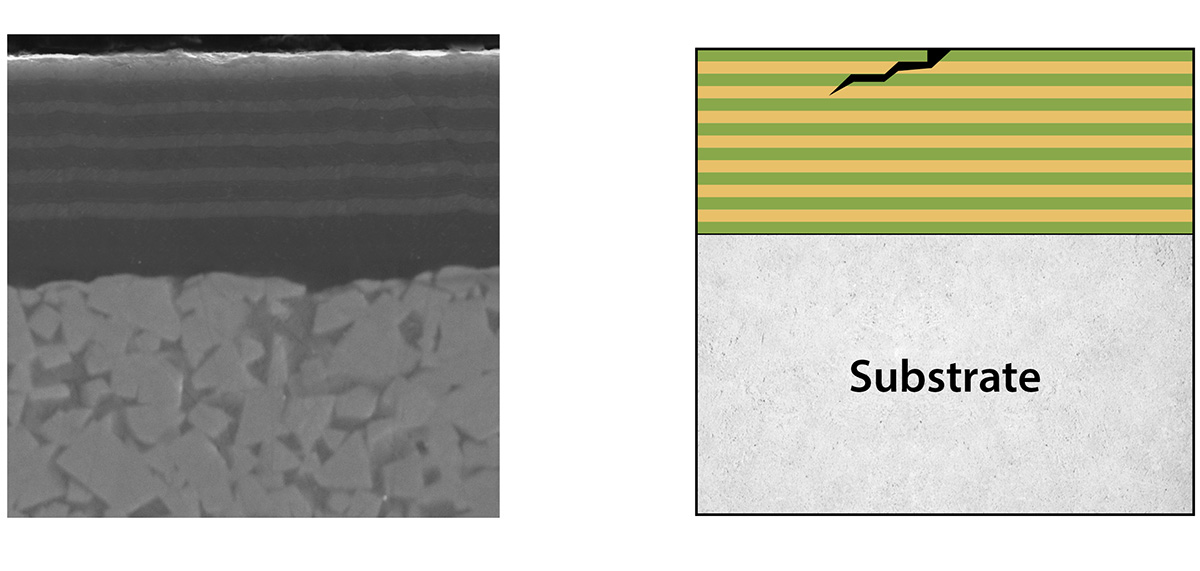
This sounds like a tongue twister but is probably the best way to describe the structure the RCH-Coating consists of. Mono-layered coatings are a relic of the past. They enabled us to start but were never predictable enough as their capability to be flexible was missing.
One of the next steps was Multi-Layer and Nano-Layer coatings. Those coatings became more complex in the number of elements and the process inside the coating furnace. But the main advantage of layers is that every transition from one layer to the next one stops cracks and makes the coating flexible. Try to tear apart a book. The more pages that book has, the more difficult it is.
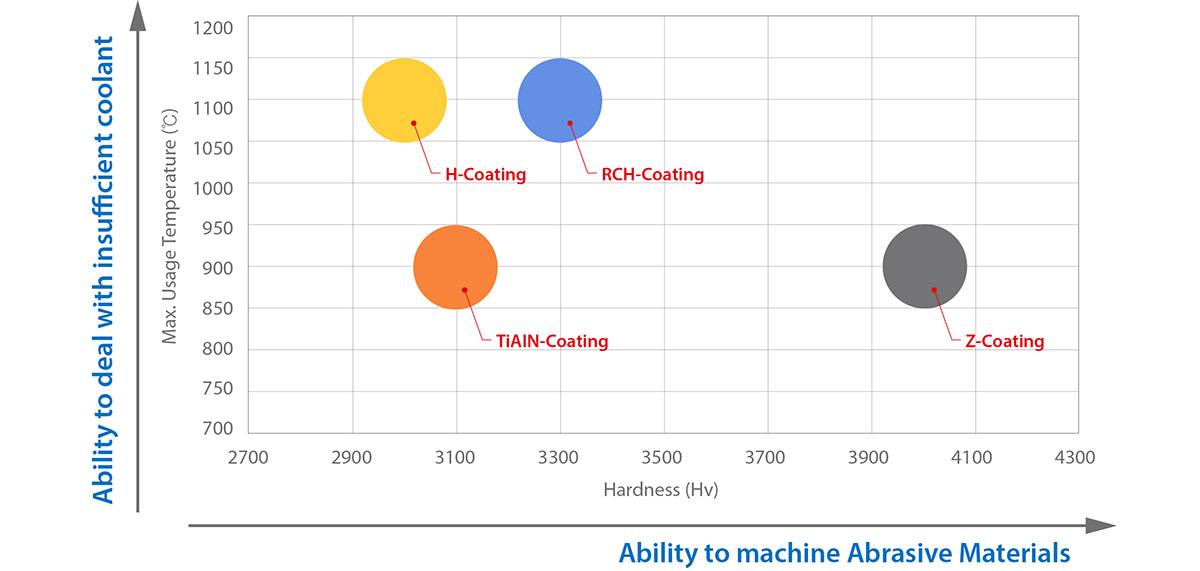
There is a tendency that new coatings are harder than the ones they replace. RCH-coating is not following that trend completely. It is a bit harder than the TiAlN-coating of Dream Drill General but far from coatings like Z-Coating.
Similar to the H-coating, the RCH-coating allows for higher temperatures than TiAlN. That helps to deal with applications that are not running under ideal conditions like high pressure internal coolant.
The next metric to talk about is roughness. The RCH-coating has statistically slightly higher roughness, but it is so close to TiAlN that it really does not make any difference.
RCH-coating promises 20% to 50% longer tool life compared to Dream Drill General depending on the conditions and environment tested. Again, the more unfavorable the conditions, the more RCH-coating makes a difference.
But for new customers, a comparison to the competition might be of interest, as here we should not recommend the Dream Drill General but the Dream Drill X. The results, of course, vary a lot as the technology level of the competition varies but tool life gains of 40% or more were already documented in the laboratory as well as in the field.
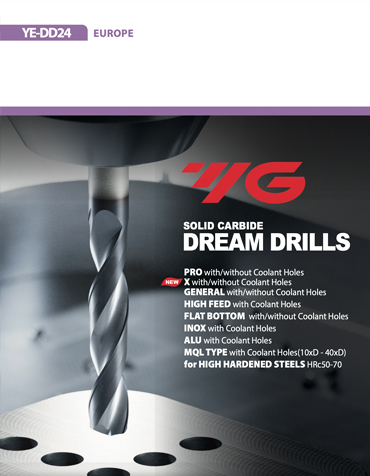
Those who have already participated in our webinars or reviewed the new Dream Drill brochure will have recognized that the cutting data from the Dream Drill General to the Dream Drill X has not changed. That is by purpose, as the tool design and the new coating do not require different applications.
The initial portfolio is to cover the majority of the existing portfolio of Dream Drill General. Rome wasn’t built in a day, there will be expansions to come.
The article numbers (EDPs) are made in a way that existing customers will have no issue converting to the Dream Drill X as only ‘DTX’ instead of ‘DH’ needs to be applied. Using the same numerical series numbers already indicates the target – convert before competition does. Those customers we couldn’t reach with the Dream Drill General so far or those simply new to us should be introduced to the Dream Drill X for the highest satisfaction.

Thilo Mueller
Product manager of round tools in EMEA


 Copyright 2021 YG-1 Co., Ltd. All rights reserved.